Types of Industrial Adhesives – Product Introduction
Adhesives are functional bonding materials that permanently or temporarily join two or more substrates through surface adhesion. For decades, mechanical fasteners such as bolts, screws, rivets, and brackets have been widely used for structural assembly. However, traditional fastening methods come with obvious drawbacks, including extra weight, corrosion risks, uneven stress distribution, and compromised appearance.
To resolve these issues, modern industrial manufacturing has shifted toward high-performance adhesive solutions. Replacing mechanical fasteners with tapes, liquid adhesives, films, and thermal bonding materials delivers uniform pressure distribution, cleaner assembly, lighter weight, and stronger long-term stability.
Each type of adhesive features unique properties to fit different materials and working conditions. Below we introduce the most common industrial adhesive types and their core advantages to help you select the ideal bonding solution for your project.
1. Liquid Glues
Modern industrial glues are upgraded self-curing bonding materials with greatly improved strength and durability. Supplied in sealed bottles or hoses, liquid glues cure through air contact or moisture reaction.
Liquid glue is ideal for gap filling and large-area coating. Most industrial glues are petrochemical-based formulas that deliver stable bonding between metals, plastics, and composite materials. They can function as both adhesive and sealant to strengthen tightness and structural firmness.
Suitable for automated dispensing systems, liquid glues are widely used for precision assembly. For high-temperature and long-term outdoor scenarios, professional grade formulas are required to ensure aging resistance.
2. Adhesive Tapes
Adhesive tapes are the most versatile and widely adopted industrial bonding solution. Available in roll form and customizable through die-cutting, tapes can be made into any size and shape for manual or automated assembly lines.
Common types include pressure-sensitive tapes, water-activated tapes, and thermal tapes. Different from point-based mechanical fasteners, tape bonding covers the entire contact surface, evenly distributing stress and eliminating concentration points. This significantly improves shear resistance and structural stability.
Tape bonding creates ultra-thin, neat, invisible joints without adding extra thickness. It perfectly fits industries requiring flat appearance, lightweight design, and seamless assembly.
3. Adhesive Films
Adhesive films are high-performance thin-layer bonding materials supplied in roll format. Similar to tapes, they support customized die-cut shapes and sizes, especially suitable for electronics, transparent materials, and smooth-surface substrates.
Most adhesive films are pressure-sensitive and liquid-free, featuring long shelf life, stable viscosity, and clean operation. Compared with regular tapes, adhesive films provide thinner bonding layers, smoother surfaces, and more uniform tension.
With advanced self-curing formulas, modern adhesive films achieve strong and durable bonding while maintaining a minimal, low-profile structure.
4. Hot-Melt Adhesives
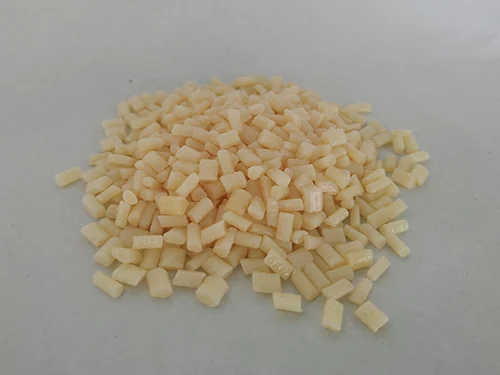
Hot-melt adhesives are heat-activated solid bonding materials, provided in sticks, pellets, or cartridges. They are clean, easy to store, and convenient for rapid production.
Hot-melt bonding performs excellently on difficult-to-bond surfaces, including aluminum foil, PVC, polyurethane, and rubber materials. It features fast curing, strong initial viscosity, and wide adaptability for irregular and soft substrates.
5. Epoxy Adhesives
Epoxy adhesives are high-strength, rigid structural adhesives, usually designed as two-component formulas. They offer fast curing, extreme weather resistance, and outstanding toughness.
Epoxy works reliably on wood, metal, board materials, and structural components. It provides high hardness, anti-peel performance, and long-term structural stability under harsh temperatures and humid environments. It is the preferred solution for heavy-load structural bonding.
6. Paste Adhesives
Paste adhesives are thick, moldable bonding materials packaged in sealed containers. Available in single-component and two-component versions, they can firmly bond rubber, metal, wood, plastic, and masonry surfaces.
Paste adhesives feature strong gap-filling ability and excellent weather resistance, ideal for uneven surfaces and fixed structural reinforcement.
7. Spray Adhesives
Spray adhesives, also known as contact rubber-based adhesives, are widely used for lightweight and flexible materials such as paper, fabric, foam, and felt.
They can also bond metal sheets, plastic panels, and wood boards. Spray glue forms a soft, uniform adhesive layer after full solvent volatilization, providing flexible bonding without hardening deformation. Professional ventilation and standard spraying processes ensure stable and clean bonding results.