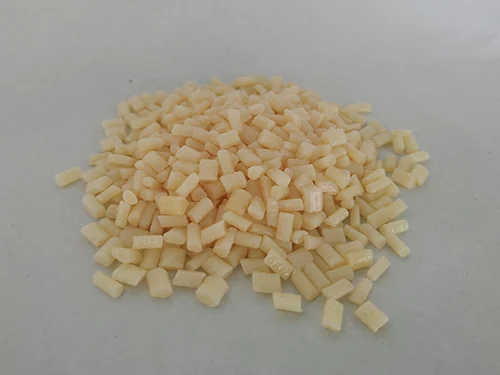
When selecting edge banding hot melt adhesive, viscosity is often considered the most important performance indicator. However, although edge banding hot melt adhesive is used to glue things together, its performance is not solely determined by its viscosity.
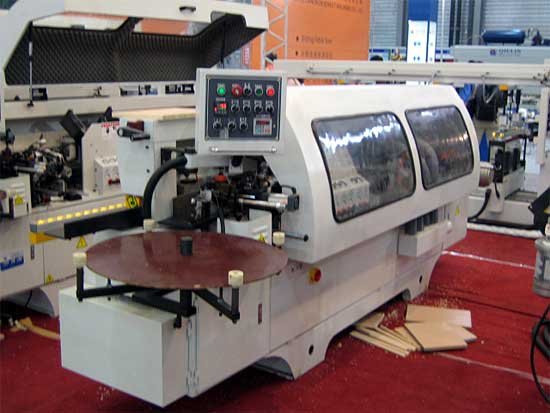
Viscosity performance test of edge sealing hot melt adhesive
Edge-banding hot melt adhesive is fundamentally different from ordinary glue. Its performance in panel furniture edge-banding is the combined result of temperature, adhesive application volume, substrate characteristics, and adhesive properties. Among these, viscosity is a key parameter—but not a decisive one. It directly affects coating process compatibility, yet cannot alone define the final edge-banding performance.
Excluding external factors such as ambient temperature, humidity, and equipment condition, and maintaining the same application temperature, the impact of viscosity on the edge-banding process shows a clear duality:
High-viscosity hot melt adhesives produce a thick, cohesive melt with strong initial tack. They rapidly build initial grab the moment the edge banding contacts the substrate, making them particularly suitable for vertical edge-banding, contoured edge-banding, and other applications demanding instant positioning. However, the thicker the melt, the poorer its flow. At high coating speeds, this can lead to uneven adhesive distribution and thicker glue lines, placing higher demands on roller precision and equipment speed control.
Low-viscosity hot melt adhesives offer excellent flow and spreadability. They require less adhesive per unit area, helping control material costs while producing finer, more aesthetically pleasing glue lines. The risk, however, is that an overly thin melt can penetrate deeply into wood pores, leaving an insufficient effective adhesive layer on the substrate surface and actually reducing bond strength. When using low-viscosity adhesives, it is therefore critical to monitor the penetration rate into the substrate. For porous materials such as MDF or particleboard, adjust the application volume or preheating temperature accordingly to ensure an adequate surface adhesive layer.
In summary, there is no universally superior viscosity for edge-banding hot melt adhesives. What matters is matching the viscosity to the specific substrate, edge banding material, equipment speed, and process requirements. Too high a viscosity may compromise coating uniformity; too low may weaken the effective bond layer. Only by striking the right balance among initial tack, application volume, and penetration can both edge-banding quality and adhesive cost be optimized. Ultimately, the true measure of any hot melt adhesive's performance lies in the actual edge-banding result—peel strength, heat resistance, glue line aesthetics, and long-term stability are the real benchmarks.