
Description
I. Precautions
1. Do not keep the melting temperature above 185°C for extended periods, as excessive heat will damage the weather- and oil-resistant structure of the adhesive and lead to sealing gaps under the refrigerator's long-term cooling and heating cycles.
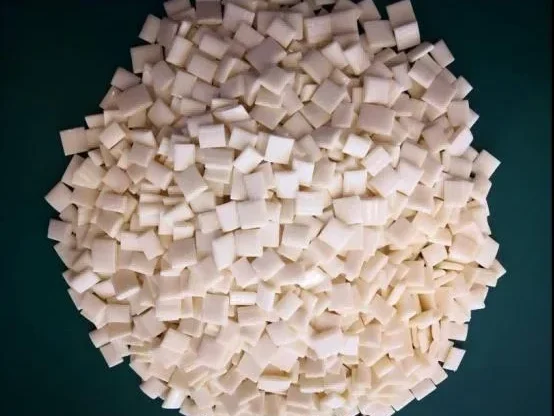
2. The pellets are fine in particle size; turn off strong convection fans in the workshop when charging material to prevent dust from falling into the melting tank and forming white specks on the appliance inner liner.
3. Close the tank lid immediately after each charge to keep moisture and dust out of the adhesive, and perform pipeline cleaning and maintenance before the production line shuts down each day.
4. Carbon deposit cleaning procedure for the pipeline and adhesive tank: soak with paraffin wax / mineral oil to dissolve carbon deposits, then circulate hot melt adhesive at 120°C through the pipeline for flushing.
5. Sealed refrigerator components must be left to air-cool for 10 minutes before being transferred to assembly; applying force before the adhesive is fully cured will cause the sealing layer to slip and result in cold air leakage.
II. Core Advantages
1. Weather-resistant formula specially developed for refrigerators and household appliances, enduring thermal cycling: adapted to start-stop cycles between -20°C low-temperature storage and room temperature, the adhesive layer will not harden, crack, shrink, or peel at the edges, ensuring long-term cabinet sealing and reducing cold air leakage.
2. Oil- and condensate-resistant, adapted to the interior working conditions of refrigerators: with excellent oil resistance, it withstands long-term erosion by food grease and condensate without swelling or delamination, eliminating water seepage and cold-air leakage failures at inner liner sealing areas.
3. Adjustable viscosity for both thin edge sealing and thick gap filling: melt viscosity can be switched via temperature control, enabling thin coating for inner liner edge sealing as well as high-viscosity filling of foam layers and cabinet joint gaps — one product covers multiple sealing processes.
4. Stringing-free spray application for a clean, flawless appliance finish: automated spraying leaves no adhesive strings or dragged residue, and the white translucent adhesive layer does not stain the plastic inner liner or decorative panels, keeping the finished product clean and neat.
5. Standardized pipeline maintenance program reduces production line downtime: the paraffin low-temperature cleaning process removes carbon deposits without disassembling equipment or hoses, greatly shortening maintenance time and improving the utilization rate of appliance assembly lines.